Alligator vs. Crocodile in the Everglades
Is that an alligator or a crocodile? In most of the world the answer depends on which continent you are standing on. In South Florida, it depends on which way you look. According to the U.S. Geological Survey, South Florida is the only place in the world where the American alligator and the American crocodile both live in the wild.
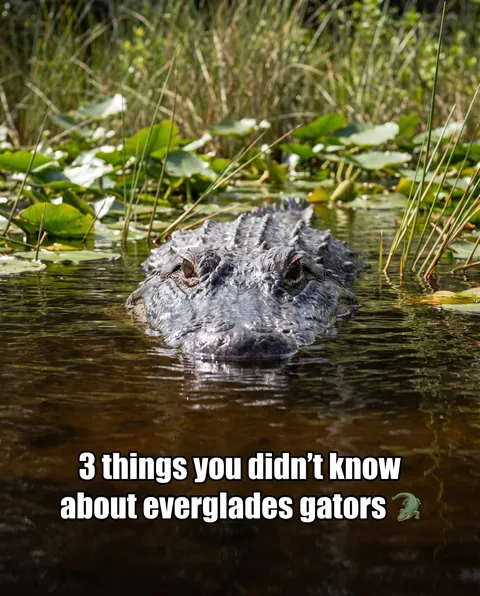
The quick answer for anyone riding the freshwater marsh along the Tamiami Trail: you are almost certainly looking at an alligator. Crocodiles prefer the salty and brackish edges of the region. But the two ranges do meet, and knowing the difference makes every sighting more interesting.
Why South Florida is the only overlap
The American alligator lives across the southeastern United States, from the Carolinas to Texas, and is common throughout Florida. The American crocodile lives in coastal areas of the Caribbean, Mexico and Central and South America. South Florida and the Keys sit at the very northern edge of the crocodile's range.
Where those two maps touch, around Florida Bay, the mangrove coast and the southern tip of the peninsula, both reptiles share the landscape. Everglades National Park is often described as the only national park where you can see both. There is one other alligator species, the Chinese alligator, but it is critically endangered and does not share its range with any crocodile.
How to tell them apart
From a distance the two can look alike, but a few features give them away.
The snout
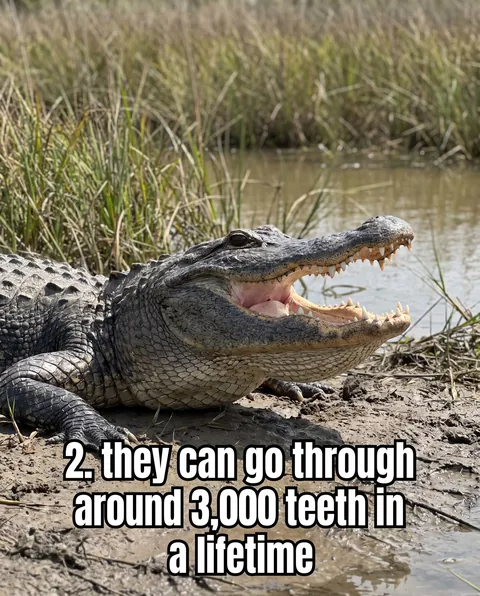
This is the easiest clue. An alligator has a broad, rounded snout shaped like a U. A crocodile's snout is narrower and more pointed, closer to a V. If the head looks like a shovel, think alligator. If it looks more like a long triangle, think crocodile.
The teeth
When an alligator closes its mouth, its upper jaw overlaps the lower jaw, and the big fourth tooth on the bottom fits into a socket in the top jaw where it is mostly hidden. On a crocodile, that fourth lower tooth sticks up outside the upper lip and stays visible even with the mouth shut. That toothy grin is a classic crocodile trait.
The color
Adult alligators are typically dark, often nearly black, especially when wet. American crocodiles are lighter, usually a grayish green or grayish brown on the back with a pale belly. Lighting and mud can fool you, so use color together with snout shape.
Size
Both can be big. In Florida, female alligators rarely exceed 10 feet, while males grow larger. The National Park Service notes that male American crocodiles can reach close to 20 feet in principle but rarely top 14 feet in the wild, and breeding females usually measure about 8 to 12 feet. Size alone is not a reliable way to tell them apart.
Fresh water vs. salt water
The biggest difference for anyone visiting the Everglades is where each one lives. Alligators are freshwater animals. They thrive in the sawgrass marsh, sloughs, canals and ponds that cover the interior of the Everglades. The National Park Service notes that alligators lack the salt-secreting glands that crocodiles have, so they handle salty water poorly and can spend only limited time in it.
Crocodiles have those glands, which lets them live comfortably in coastal, brackish and saltwater habitat. In South Florida they use mangrove creeks, coves, ponds and the shores of Florida Bay, Biscayne Bay and the Keys. The Florida Fish and Wildlife Conservation Commission notes they occasionally show up inland in fresh water along the southeast coast, where canals connect to the sea.
That split explains what you see on the water. An airboat ride through the freshwater glades west of Miami is alligator country. The coastal zones near Flamingo and Florida Bay are where crocodile sightings happen.
A crocodile comeback story
The American crocodile is one of South Florida's quieter conservation successes. It was listed as endangered in 1975, and the U.S. Fish and Wildlife Service estimated the Florida population at only about 200 to 300 animals in the mid-1970s. Habitat loss along the coast had pushed it to the brink.
Protection of nesting areas made a real difference. Everglades National Park, Crocodile Lake National Wildlife Refuge in the Keys and lands owned by Florida Power and Light all provided safe nesting habitat. In March 2007, the Fish and Wildlife Service reclassified the Florida population from endangered to threatened. At that time it estimated roughly 1,400 to 2,000 crocodiles, not counting hatchlings. It remains federally threatened today, while populations outside Florida remain listed as endangered under the U.S. Endangered Species Act.
Crocodile nesting is also tied to water management. Changes in the salinity and water levels of Florida Bay, driven by decades of drainage, affect the coastal habitat crocodiles rely on, which is one more reason Everglades restoration matters.
Respect both
American crocodiles are generally shy and less likely than alligators to be seen near people, but both are large predators and both deserve space. Never approach, feed or harass either one. Feeding alligators or crocodiles is illegal in Florida, and the crocodile's threatened status means it is protected by both state and federal law. Watch from a distance, enjoy the rare chance to see both of these ancient reptiles in one region, and let them be.
Quick answers
Are there crocodiles in the Everglades?
Yes. American crocodiles live in the coastal, brackish and saltwater parts of the Everglades region, especially around Florida Bay and the mangrove coast. The freshwater interior is mostly alligator habitat.
What is the easiest way to tell an alligator from a crocodile?
Look at the snout and teeth. Alligators have a broad, U-shaped snout and hide most lower teeth when the mouth is closed, while crocodiles have a narrower, V-shaped snout with the fourth lower tooth showing.
Is the American crocodile endangered?
The Florida population was reclassified from endangered to threatened in 2007 after a strong recovery. It is still federally protected.
Sources
- Do alligators and crocodiles exist together anywhere in the world? - USGS
- American Crocodile - Everglades National Park (NPS)
- American Crocodile - Florida Fish and Wildlife Conservation Commission
- Recovering American Crocodile Reclassified From Endangered to Threatened - USFWS
- American Alligator - Everglades National Park (NPS)
- American Alligator - Smithsonian's National Zoo