Five Gator Facts from the Airboat
Spend enough mornings on the water west of Miami and the alligators start to feel like neighbors. They are the animal guests ask about most, and for good reason. The American alligator is the signature predator of the Everglades, and nearly everything it does, from lying still in the sun to digging in the mud, has a purpose. Here are five things worth knowing before you see one from an airboat seat.
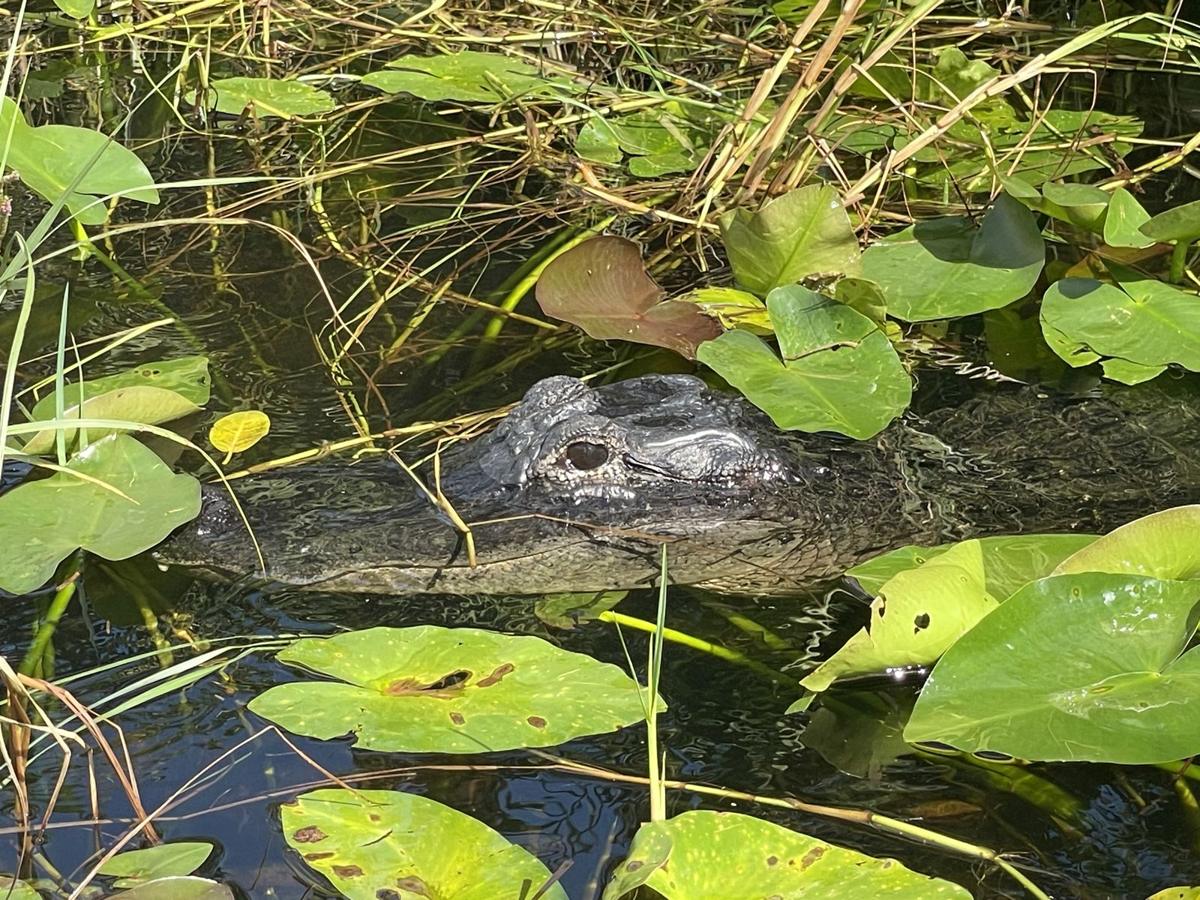
Five things to know about Everglades alligators
1. They bask to warm up
Alligators are ectothermic, which is the scientific way of saying cold-blooded. They cannot make their own body heat, so they borrow it from the sun, the air and the water. When you see a gator stretched out on a bank with its mouth open, it is not being lazy.
Temperature controls almost everything about an alligator's day. According to the Florida Fish and Wildlife Conservation Commission, they are most active when it is roughly 82 to 92 degrees Fahrenheit, they stop feeding when it drops to around 70 degrees, and they become dormant below about 55 degrees. That is why a cool winter morning often shows you more basking alligators than a hot summer afternoon. On the hottest days they slip back into the water or the shade to cool off.
2. They are fast, especially in the water
On land, an alligator is a sprinter, not a distance runner. It can move quickly for a short burst, usually to get from the bank into the water. Britannica puts that burst at around 11 miles per hour.
In the water it is a different animal. That long, muscular tail sweeps side to side and drives the body forward with very little splash, and short bursts can reportedly reach close to 20 miles per hour. Most of the time, though, a gator simply drifts. Its legs fold against its body, and it can glide toward a meal so quietly that the fish never notice. Speed is for the strike, not for cruising.
3. Eyes and nostrils are often all you will see
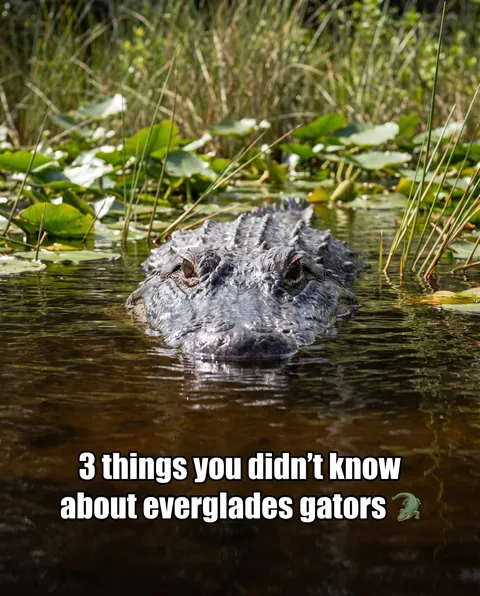
Look at the top of an alligator's head and you will notice the eyes and nostrils sit high, almost on the same flat line. That layout lets the animal breathe, see and listen while the rest of its body stays hidden below the surface. A full-grown gator can look like nothing more than two small bumps and a floating stick.
Underwater, alligators can close their nostrils and ears, and a clear protective eyelid slides across each eye. This is one reason guides ask everyone to stay seated and keep hands inside the boat. The animal you can see is often not the only one nearby.
4. The spring bellow, and the water dance
Courtship in Florida begins in early April, with mating in May or June. This is bellowing season. Males, and sometimes females, raise their heads and tails and let out a deep, rumbling roar that can carry a long way across the marsh.
Just before the audible bellow, a male often vibrates so strongly at a very low frequency that the water on his back seems to boil, with droplets jumping straight up off his skin. People call it the water dance. Researchers have found that the low resonance of a bellow tracks body size, so bigger gators sound deeper. Scientists think this helps rivals size each other up without a costly fight.
Bonus: nests and the temperature trick
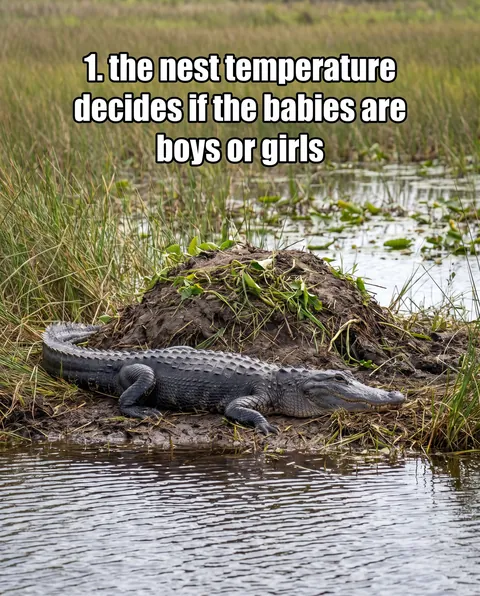
After mating, the female builds a mound nest of mud and plants and lays dozens of eggs, usually in late June or early July. Here is one of the strangest facts about alligators: the temperature inside the nest decides whether the babies are male or female. The National Park Service notes that eggs incubated around 90 to 93 degrees tend to hatch as males, while eggs at about 82 to 86 degrees tend to hatch as females, with mixed results in between. After about two months, the hatchlings start calling from inside their eggs, and the mother opens the nest and may carry them to the water in her mouth.
5. They shape the landscape
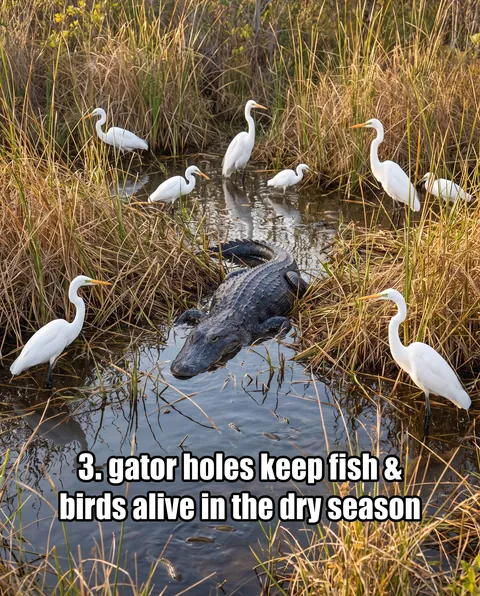
The Everglades has a wet season and a dry season. By late winter and spring, large parts of the marsh dry out. Alligators respond by clearing and deepening depressions in the limestone and muck, using their bodies, tails and jaws. These alligator holes usually hold water through the dry season unless the drought is severe.
For the rest of the ecosystem, a gator hole is a lifeboat. Fish, turtles, snails, frogs and insects crowd into the remaining water, and birds come to feed on them. The gator benefits too, since its dinner comes to it. When the rains return in late spring and summer, those survivors spread back across the glades and repopulate the marsh. Biologists often describe the alligator as a keystone species because so much else depends on what it does.
Bonus facts guests love
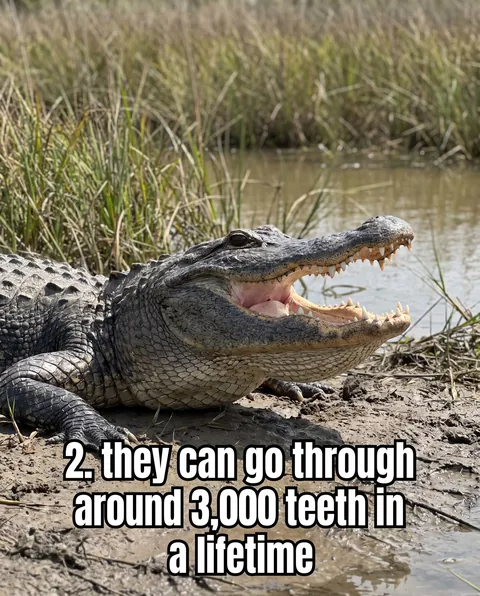
- Teeth on repeat. An alligator has roughly 80 teeth at a time, and each one can be replaced many times. Researchers at the University of Southern California reported that each tooth can be replaced up to about 50 times, which is why you will often see estimates of 2,000 to 3,000 teeth over a lifetime.
- Size. Females rarely top 10 feet. Males can grow much larger, though alligators in South Florida tend to run smaller than those farther north.
- Long lives. Wild alligators can live around 50 years.
Watch, do not feed
The best way to enjoy alligators is from a respectful distance. Feeding a wild alligator is illegal in Florida, and for good reason: gators that learn to connect people with food lose their natural caution, and that often ends badly for the animal. Keep your distance, keep your hands in the boat, and let the gator go about its business. Watching one bask, glide or bellow on its own terms is the real show.
Quick answers
Why do alligators lie with their mouths open?
It is usually a way to manage body temperature. Alligators are cold-blooded, and gaping while basking helps them release some heat without leaving the warm sun.
When do alligators bellow in the Everglades?
Bellowing peaks during the spring courtship season, which in Florida begins in early April. Mating typically follows in May or June.
What is a gator hole?
It is a depression that an alligator clears and keeps open in the marsh. It usually holds water through the dry season and becomes a refuge where fish, turtles and birds gather.
Is it legal to feed alligators in Florida?
No. Feeding wild alligators is illegal in Florida because it teaches them to associate people with food.
Sources
- American Alligator - Everglades National Park (NPS)
- Alligator Facts - Florida Fish and Wildlife Conservation Commission
- How Fast Are Alligators? - Britannica
- In both love and war, alligators signal size by bellowing - ScienceDaily
- Alligator stem cell study gives clues to tooth regeneration - USC
- American Alligator - Smithsonian's National Zoo