The Turtles of the Everglades
Turtles rarely top anyone's list of Everglades wildlife, yet they are everywhere: lined up on logs, floating at the surface with just a nose showing, or plodding across a levee in nesting season. Everglades National Park lists 15 turtle species, from small mud turtles to sea turtles in the coastal waters. Here are the freshwater turtles you are most likely to notice, and how to tell them apart.
Why turtles bask
Like alligators, turtles are cold-blooded. They depend on outside heat to warm their bodies, digest food and stay active. Basking in the sun is how they do it. On a cool morning you may see a log or a muddy bank lined with turtles, each one stretched out with its legs extended and its neck reaching for warmth.
Basking does more than warm a turtle up. Drying out in the sun is also thought to help turtles shed algae and discourage some parasites on their shells. Basking turtles are wary, though. They slide into the water at the first sign of danger, which is why a row of turtles often disappears with a series of plops as a boat comes around the bend.
The cooters: Florida's big basking turtles
Florida red-bellied cooter
Also called the Florida redbelly turtle, this is one of the most common large basking turtles in South Florida. It has a high, domed dark shell, often with a reddish band or Y-shaped marking on the side scutes, and yellow stripes on the head and legs. Young turtles show more red on the underside, and the color tends to fade with age. Adults are mainly plant eaters, grazing on aquatic vegetation, while hatchlings eat more insects.
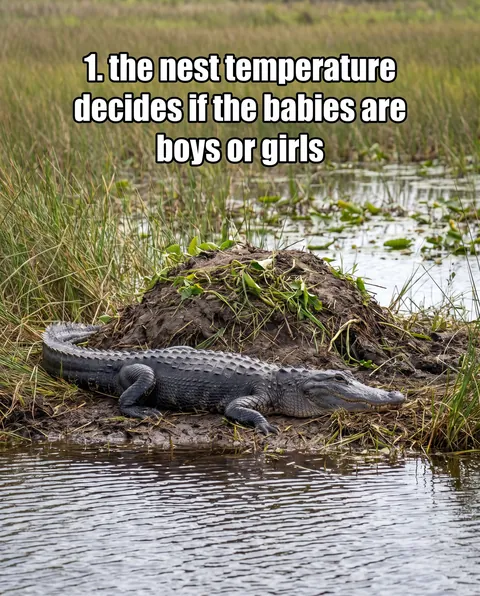
The red-bellied cooter has a remarkable habit. Females sometimes lay their eggs inside alligator nests, including active ones. The big mound of warm, decaying vegetation makes a good incubator, and a mother alligator guarding her nest may also discourage some egg predators.
Peninsula cooter
The peninsula cooter is a close relative often seen basking alongside red-bellies. Its shell is usually less high-domed than a red-belly's, and field guides point to the hairpin-shaped yellow stripes on top of its head as a good mark. It eats mostly aquatic plants.
Softshells, snappers and mud turtles
Florida softshell
The Florida softshell looks like a turtle someone flattened. Instead of hard plates, its shell is covered in leathery skin, and its long neck ends in a tube-shaped snout that works like a snorkel. A softshell can bury itself in the soft bottom and lift only its nose to the surface to breathe.
Females grow far larger than males, with shells that can reach roughly two feet across, making them among the biggest freshwater turtles you will see in the glades. Softshells are fast swimmers and active predators, eating snails, fish and other small animals. In recent years Florida has restricted taking softshells from the wild because of a virus affecting several freshwater turtle species.
Florida snapping turtle
The Florida snapping turtle is a big, rough-looking turtle with a large head, powerful jaws, a long ridged tail and a shell that is small relative to its body. Unlike the cooters, snapping turtles rarely bask in the open. They spend most of their time on the bottom, often partly buried, waiting for food to come close. You are most likely to see one in nesting season, when females leave the water to dig nests, or when one surfaces for air. Give them plenty of room. A snapping turtle on land will defend itself with a fast and serious bite.
Mud turtles and the stinkpot
Some of the most common Everglades turtles are also the easiest to overlook. The striped mud turtle is a small turtle, usually just a few inches long, with light stripes running down its head and often along its shell. The Florida mud turtle is a similar small, plain brown species. Both live in shallow marshes and ditches and spend much of their time moving along the bottom.
The stinkpot, or common musk turtle, earns its name honestly. When handled or threatened, it releases a strong musky odor. It is small, dark and mostly aquatic.
The park list also includes the Florida chicken turtle, with its unusually long neck, the Florida box turtle, a land-dwelling species, and the diamondback terrapin, which lives in brackish mangrove areas along the coast.
What you might see from the water
From a boat moving through the freshwater marsh, your best chances are cooters and softshells. Look for:
- Rows of domed shells on logs, canal edges and tree island roots, especially on sunny mornings after a cool night.
- A small pointed snout breaking the surface of still water, which is often a softshell.
- Turtles crossing levees and roads from spring into summer, when many species nest.
If you see a turtle on a road, it is fine to slow down and let it pass. Florida rules prohibit collecting freshwater turtle eggs and limit taking turtles from the wild, so the best approach is to watch and leave them where they are.
A note on red-eared sliders
Not every turtle you see in South Florida is native. The red-eared slider, recognized by a red or orange patch behind each eye, is native to the central United States and has been one of the most common pet turtles for decades. Released and escaped pets have established populations in Florida.
The Florida Fish and Wildlife Conservation Commission classifies the red-eared slider as a regulated nonnative species. It competes with native turtles for food and basking spots, may spread parasites and disease, and can hybridize with Florida's native yellow-bellied slider. Releasing any nonnative animal into the wild is illegal in Florida. If you have a pet turtle you can no longer keep, FWC offers a rehoming program so it never ends up in a canal.
Turtles are the quiet residents of the Everglades. Next time you pass a sunny log, take a second look.
Quick answers
Why do turtles line up on logs?
They are basking. Turtles are cold-blooded and use the sun to warm up, digest food and stay active, and logs give them a safe spot near the water.
Do red-bellied cooters really nest in alligator nests?
Yes. Florida red-bellied cooters sometimes lay their eggs inside alligator nests, including active ones, where the warm mound of vegetation helps incubate them.
Are red-eared sliders native to Florida?
No. Red-eared sliders are native to the central United States. In Florida they are a regulated nonnative species, and releasing them into the wild is illegal.
Sources
- Reptiles - Everglades National Park (NPS)
- Pseudemys nelsoni (Florida Redbelly Turtle) - Animal Diversity Web, University of Michigan
- Freshwater Turtles - Florida Fish and Wildlife Conservation Commission
- Red-eared Slider - Florida Fish and Wildlife Conservation Commission
- WISE Species Profile: The Florida Softshell Turtle - UF/IFAS Extension