Tree Islands of the Everglades: Hammocks, Bayheads and Cypress Domes
Look out across the Everglades and the sawgrass seems to go on forever. Then, every so often, a dark clump of trees rises out of the marsh like a ship at sea. These are tree islands: patches of slightly higher ground where trees and shrubs can grow in a landscape that is otherwise mostly water and sedge. They come in several forms, including hardwood hammocks, bayheads and cypress domes, and although they cover only a small share of the land, they matter far more than their size suggests.
What is a tree island?
A tree island is any stand of trees growing on a local high spot in the Everglades marsh. The difference in height can be tiny; a hammock may sit only a few inches to a couple of feet above the surrounding water. In a place as flat as the Everglades, that is enough to change everything. Ground that stays dry, or floods only briefly, can support trees that would drown in the open marsh.
Many tree islands share a distinctive teardrop shape. A rounded "head" of taller, denser forest sits on the upstream end, usually on the highest ground. Behind it, a long "tail" stretches downstream in the direction the water flows, gradually thinning into shrubs and marsh plants. In Shark River Slough, some tails stretch more than half a mile.
Types of tree islands
Hardwood hammocks
Hammocks are the driest tree islands, dense stands of broad-leaved trees on natural rises that rarely flood. They are where tropical and temperate Florida meet. Tropical trees such as gumbo limbo, West Indian mahogany and cocoplum grow beside temperate species like live oak, red maple and hackberry. Under the shady canopy, ferns and air plants thrive in the moist air.
Many hammocks are ringed by a natural moat. Acids from decaying leaves gradually dissolve the limestone around the island's edge, creating a low ring that holds water and helps keep marsh fires from burning into the forest.
Bayheads
Bayheads are wetter than hammocks. They are named for the bay trees that often dominate them, including sweetbay, redbay and swamp bay, along with dahoon holly, wax myrtle, cocoplum and pond apple. Their soils are often deep, wet peat, and their floors can stay soggy for much of the year. In the coastal Everglades, bayheads often form over dips in the limestone bedrock, where soil builds up faster than in the surrounding marsh until it rises above it.
Cypress domes
Cypress domes are some of the easiest tree islands to recognize. Cypress trees grow in a roughly circular depression, often where limestone has dissolved into a solution hole. The water and peat are deepest in the middle, so the tallest trees grow at the center and shorter ones at the edges, giving the stand its domed profile. Cypress is a deciduous conifer, so in winter the domes turn rusty brown and drop their needles. Where cypress grows in long lines following the water, the stands are called strands.
How tree islands form
Scientists are still working out exactly how every tree island got started, and the answer likely varies from place to place. Some islands sit on small bumps in the limestone bedrock. Others begin where peat builds up faster than it decays. Over time, birds roosting and nesting in the first trees add nutrients through their droppings, helping the island grow richer than the marsh around it.
Many fixed tree islands are old. Sediment and pollen studies on islands in the southern Everglades suggest they began forming from sawgrass marsh roughly 1,700 to 3,200 years ago and took a thousand years or more to mature into the forests seen today.
People played a part too. Archaeologists working in Everglades National Park have found that tree islands almost always contain signs of past human use: pottery fragments, animal bone, shell and other debris mixed into the soil. Some researchers argue that centuries of human activity helped build up and enrich certain islands, so that the people and the islands shaped each other.
Why tree islands matter to wildlife
Tree islands are biodiversity hotspots. A U.S. Geological Survey summary notes that they hold two to three times the plant and animal diversity of the surrounding wetlands. During the wet season, when the rest of the Everglades floods, they are often the only dry ground for miles. Deer, raccoons, bobcats, snakes, tree snails and many other land animals depend on them, and wading birds use the trees to roost and nest.
That makes tree islands a good measure of Everglades health, and a fragile one. They suffer when water stays too high for too long, which can drown the trees, and when the land dries too much, which can let fire burn into the peat. After major flooding in the late 1940s and the drainage and levee projects that followed, an estimated half of the tree islands in parts of the Everglades were lost or degraded. Protecting the remaining ones is a goal of current restoration work.
Tree islands and the people of the Everglades
For people, tree islands have long been home. Native peoples lived and worked on them for thousands of years, using the high ground for camps and villages in the middle of rich fishing and hunting country. In the 1800s and 1900s, Seminole and Miccosukee families built camps on hammocks, because they were the only places that stayed dry when the waters rose. The Miccosukee and Seminole are living nations today, and their connection to this landscape continues.
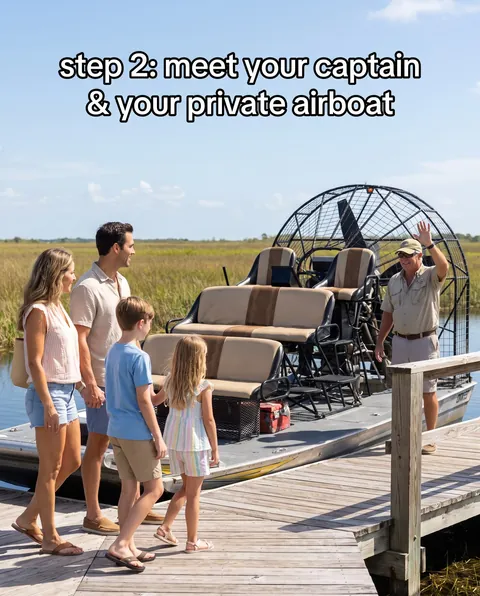
Later, Gladesmen and airboat operators also used tree islands as camps and landmarks. Some still serve as hunting camps in the East Everglades. From an airboat seat, you will notice how guides read the land by these islands, each one a familiar shape on a horizon that, to newcomers, looks the same in every direction.
Quick answers
What is the difference between a hammock and a bayhead?
A hardwood hammock sits on higher, drier ground and holds trees like live oak and gumbo limbo. A bayhead is wetter, often on deep peat, and is dominated by bay trees such as sweetbay and redbay.
Why are tree islands shaped like teardrops?
Slow sheetflow moving south across the marsh shapes them over centuries. The highest, densest forest forms the upstream head, and a long tail of lower vegetation trails downstream.
Why do cypress domes look dome-shaped?
The water and peat are deepest at the center of the depression, so the tallest cypress trees grow in the middle and shorter ones grow around the shallower edges.
Sources
- Ecosystems: Hardwood Hammock - Everglades National Park (NPS)
- Everglades Archaeological Heritage - Everglades National Park (NPS)
- Tree Islands of the Florida Everglades (USGS Fact Sheet 2004-3095)
- Paleoecological insights on fixed tree island development in the Florida Everglades (USGS)
- Swamp Forests - South Florida Terrestrial Ecosystems Lab, FIU
- Dome Swamp - Florida Natural Areas Inventory