The Everglades Wet and Dry Seasons, Explained
The Everglades does not have four seasons in the usual sense. It has two: a wet season and a dry season. Roughly speaking, the wet season runs from about mid-May into October or November, and the dry season covers the cooler months from about November or December through April or early May. The exact edges shift a little from year to year, but the pattern itself is the heartbeat of the whole ecosystem. Nearly everything that lives here, from sawgrass to wood storks, is timed to the rise and fall of the water.
The wet season: heat, storms and high water
Everglades National Park averages close to 60 inches of rain a year, and most of it falls in the warm months. South Florida typically gets about 70 percent of its annual rainfall during the six-month stretch from May through October. Daytime highs sit around 90 degrees, humidity often runs above 90 percent, and the heat index can climb past 100.
The classic wet-season day starts bright and calm. As the land heats, moist air rises, sea breezes push inland from both coasts, and towering clouds build through late morning. By afternoon, thunderstorms roll across the glades with heavy rain, gusty wind and frequent lightning. Many of these storms pass in under an hour, leaving the evening cooler and freshly washed. Slow-moving storms, though, can drop several inches of rain in one spot.
All that water spreads out across the nearly flat landscape and begins its slow drift south as sheetflow. Marshes that were damp mud in April can hold a foot or more of water by late summer. Tropical storms and hurricanes add to the totals; the Atlantic hurricane season runs from June 1 to November 30, and South Florida sits in one of the most active parts of it.
Wildlife in the wet season
High water gives animals room. Fish, crayfish, frogs and the tiny invertebrates at the base of the food web multiply across the flooded marsh. With water everywhere, wildlife spreads out, so animals are often harder to spot from a single viewpoint. Plants grow fast, and the sawgrass and sloughs turn a deeper green.
Mosquitoes
There is no getting around it: the wet season is mosquito season. Standing water and warm temperatures let mosquitoes and biting flies boom, especially near mangroves, in shaded hammocks and around dawn and dusk. They are a natural, important food source for fish, birds and dragonflies, but they can make a summer walk miserable. Repellent, long sleeves and light-colored clothing help, and some visitors bring head nets.
The dry season: shrinking water, gathering wildlife
By late fall the storms fade. Cool, dry air from the north pushes down the peninsula, humidity drops and skies clear. Average dry-season highs are in the upper 70s, with lows in the 50s, and the occasional strong cold front can bring near-freezing mornings. The dry season gets only about a quarter of the year's rain.
As the weeks pass, water levels fall. Shallow marshes dry out first, and the water that remains pulls back into the deeper places: sloughs, ponds, canals, solution holes in the limestone and the pools that alligators keep open. Fish that spread across the marsh in summer become packed into these shrinking pockets.
Why wildlife concentrates
That concentration of food is what makes the dry season so remarkable. Wading birds such as herons, egrets, ibises and wood storks gather wherever fish are trapped in shallow water. Wood storks are a good example of how finely tuned this system is. They feed by touch, sweeping their bills through murky water and snapping them shut on contact, so they need fish packed close together. A nesting pair needs hundreds of pounds of fish over a breeding season, and storks may not attempt to nest at all if the water does not drop in the right way.
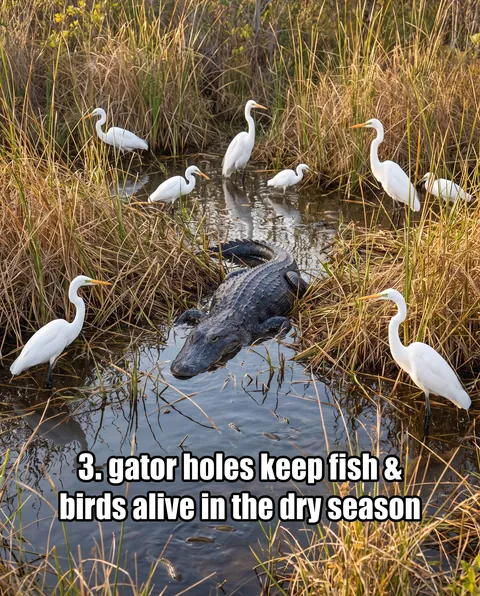
Alligators matter here too. In low spots, gators clear out vegetation and muck, keeping small ponds of water open through the driest months. Fish, turtles, snails and other animals survive in these refuges, and birds and other predators come to them to feed. When the rains return, survivors spread back out across the marsh and the cycle starts again.
Fire is part of the dry season as well. Lightning strikes in late spring, before the full rains arrive, can burn across dry sawgrass, clearing dead material and keeping woody plants from taking over.
What the seasons mean for visitors
The dry season, roughly December through April, is the most popular time to visit. Temperatures are comfortable, insects are fewer (though not gone, especially at dusk), and wildlife is easier to find because animals gather around remaining water. Ranger programs and tours run on fuller schedules in these months.
The wet season has its own rewards. The landscape is lush, the skies are dramatic, crowds are thinner, and high water makes the glades look like the true river of grass. Plan outdoor time for the morning, before storms build, and treat lightning seriously: if thunder is close, get off open water and away from exposed areas. Pack water, sun protection and insect repellent, and check the forecast and park alerts before you go, since some services are reduced and hurricane threats can close areas.
In any season, keep a respectful distance from wildlife. Birds concentrated at a drying pond are feeding hard, often to raise young, and disturbing them costs energy they cannot spare. Feeding alligators or other wild animals is illegal in Florida and dangerous for both people and the animals.
Watching the water rise and fall over a year is one of the best ways to understand the Everglades. Many people who have only seen it in winter are surprised by how different it looks in August, and the reverse is just as true.
Quick answers
What is the best time of year to visit the Everglades?
Most people prefer the dry season, roughly December through April, for milder weather, fewer insects and easier wildlife viewing. The wet season is hotter and stormier but greener and less crowded.
When do afternoon thunderstorms happen in the Everglades?
During the wet season, storms commonly build from late morning into the afternoon as the land heats and sea breezes collide. Mornings are usually the calmest time to be outdoors.
Are there mosquitoes in the dry season?
Fewer, but not none. Mosquitoes and biting flies can still be active in some areas and around dawn and dusk, so it is wise to bring repellent year-round.