Marjory Stoneman Douglas: The Writer Who Named the River of Grass
Marjory Stoneman Douglas was a Miami writer who changed the way the country understood the Everglades. Her 1947 book, The Everglades: River of Grass, argued that this vast wetland was not a useless swamp waiting to be drained but a slow, shallow river that kept South Florida alive. Decades later, in her late seventies, she founded Friends of the Everglades and spent the rest of a very long life defending the place she had described. She died in 1998 at 108, and one of the largest wilderness areas in the eastern United States now carries her name.
From Minneapolis to Miami
Douglas was born on April 7, 1890, in Minneapolis, Minnesota. She graduated from Wellesley College, where classmates chose her as class orator, and after a short, unhappy marriage she moved to Miami in 1915. Her father, Frank Stoneman, ran the newspaper that became the Miami Herald, and she went to work for him, first covering society news and later writing for the editorial page.
Miami was still a small town then, and the Everglades began just a few miles west. Over the following decades Douglas built a career as a freelance writer, publishing short stories in national magazines and taking on causes that were unpopular at the time, including women's suffrage and fair housing. She was also, early on, part of the circle of Floridians pushing for an Everglades national park.
Why "river of grass" mattered
In the early 1940s Douglas was asked to write about the Miami River for a publisher's series on American rivers. The Miami River is short, so she widened the frame and spent several years researching the much larger system that fed it. What she learned from hydrologists and naturalists changed her own thinking: the water moving south from Lake Okeechobee did not sit still. It flowed, very slowly, in a sheet across a broad, nearly flat landscape covered with sawgrass, before draining into Florida Bay and the Gulf.
That idea gave her the title and the central image of the book. Calling the Everglades a river of grass was not just poetic. It told readers that the region was connected from end to end, that what happened to water in one place affected everything downstream, and that cutting canals or building dikes was not "reclaiming" wasted land but damming a living river.
The book came out in 1947, the same year Everglades National Park was dedicated. It also covered the region's human history, including the Calusa, the Seminole and Miccosukee people, and the speculators and drainage promoters who followed. A revised edition appeared in 1987, the same year as her autobiography, Voice of the River. Many Floridians still say the book is the best place to start understanding the Everglades.
Friends of the Everglades
For about twenty years after the book, Douglas was better known as a writer than an activist. That changed in 1969, when plans for a giant jetport in the Big Cypress, just north of the national park, threatened to cut into the heart of the system. At 79, she founded Friends of the Everglades to fight it. The jetport was stopped, and the group kept going.
Under her leadership it pushed for cleaner water, more natural flows and public education, and it is still active today. Douglas became a familiar figure at public hearings, small and sharp, usually in her trademark wide-brimmed hat and dark glasses, speaking plainly to engineers and politicians who were often decades younger. She believed education was the long-term answer and encouraged young people to get involved.
Honors and the Marjory Stoneman Douglas Wilderness
In 1993 President Bill Clinton awarded her the Presidential Medal of Freedom, the nation's highest civilian honor. She also received many state and conservation awards, and schools and public buildings across Florida carry her name.
The most fitting tribute is in the park itself. In 1978 Congress designated about 1.3 million acres of Everglades National Park as federal wilderness, the highest level of protection public land can receive. In November 1997, while she was still living, Congress renamed it the Marjory Stoneman Douglas Wilderness. It covers most of the park, from sawgrass prairie and mangrove coast to the islands of Florida Bay, and it is managed to keep human impact as light as possible.
Her legacy on the water today
Much of what visitors hear about the Everglades today traces back to her framing: the water flows south, the system is one connected whole, and restoring it means getting that flow right again. Modern restoration work, from raising sections of the Tamiami Trail to the large federal-state Comprehensive Everglades Restoration Plan, follows the same basic logic she laid out in 1947.
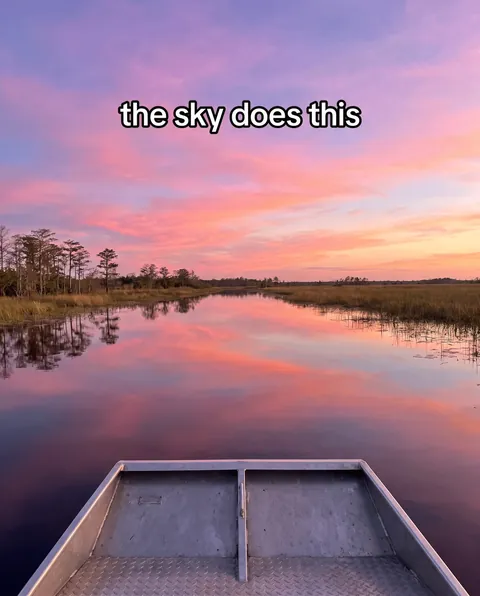
When you look out across the sawgrass west of Miami, from a boardwalk or from an airboat seat, it can look perfectly still. Douglas taught several generations to look again and see a river moving through it. At Everglades Godfather, that idea sits close to our own message: there is only one Everglades, and it is worth protecting.
Quick answers
Why did Marjory Stoneman Douglas call the Everglades a river of grass?
Because water from the Lake Okeechobee region flows slowly south in a broad, shallow sheet through sawgrass toward Florida Bay. The phrase showed readers the Everglades is a connected, moving system, not a stagnant swamp.
When was Friends of the Everglades founded?
Douglas founded Friends of the Everglades in 1969, at age 79, to oppose a proposed jetport in the Big Cypress. The organization is still active today.
What is the Marjory Stoneman Douglas Wilderness?
It is the roughly 1.3-million-acre federal wilderness inside Everglades National Park, designated in 1978 and renamed in her honor by Congress in 1997.