The Miccosukee and Seminole People of the Everglades
The Everglades is not only a wilderness. It is also a homeland. Two federally recognized tribes, the Miccosukee Tribe of Indians of Florida and the Seminole Tribe of Florida, have deep roots in this landscape. Their ancestors took refuge here during the Seminole Wars of the 1800s, and both nations remain in South Florida today, with their own governments, lands, languages and cultures. The Seminole Tribe gained federal recognition in 1957, and the Miccosukee Tribe in 1962.
Two nations, shared roots
The Seminole and Miccosukee peoples share much of their history. Their ancestors were largely Creek-related peoples from what is now Georgia and Alabama who moved into Florida during the 1700s, where they joined with Native people already living there. Over time, distinct communities formed. Today the Miccosukee speak Mikasuki, which the tribe also calls Elaponke, and many Seminole people speak either Mikasuki or Creek (Muscogee).
It is important to see them as two separate, self-governing nations rather than one group with two names. Each has its own constitution, elected leadership, reservations, businesses and services for its members. Each also has its own way of telling its history, and both tribes publish that history themselves.
The Seminole Wars and refuge in the Everglades
Florida became a battleground in the early 1800s as the United States pushed to take Native lands and remove Native people to the West. Historians generally count three Seminole Wars: the first around 1817 to 1818, the second from 1835 to 1842, and the third from 1855 to 1858. The Second Seminole War was the longest and most expensive conflict the U.S. government fought against Native people.
Thousands of people were forcibly removed to Indian Territory, in present-day Oklahoma. But a few hundred people refused to leave and moved deeper into South Florida, into the Everglades and the Big Cypress Swamp. The country was hard for soldiers to move through and easier for people who knew it. Families lived on hammocks, the slightly higher tree islands, and traveled the sloughs by dugout cypress canoe.
No peace treaty ever formally ended the wars. The descendants of those who stayed are the Seminole and Miccosukee people of Florida today, and the Seminole Tribe describes its ancestors as never conquered.
Life on the water: chickees, canoes and the airboat era
One lasting symbol of this period is the chickee, an open-sided shelter with a frame of cypress logs and a roof of thatched palm fronds. According to the Seminole Tribe, the design took hold during the wars, when families needed shelter they could build quickly while moving between camps. A raised floor kept people dry, and the open sides let breezes through in the heat. Chickees are no longer typical homes, but tribal builders still construct them, and you will see them across South Florida.
For generations, tribal families made a living from the Everglades through hunting, fishing, trapping and trading. In the late 1800s and early 1900s they traded hides, furs and plumes with trading posts on the edge of the glades. Frogging, gathering frog legs for market, became another source of income in the twentieth century.
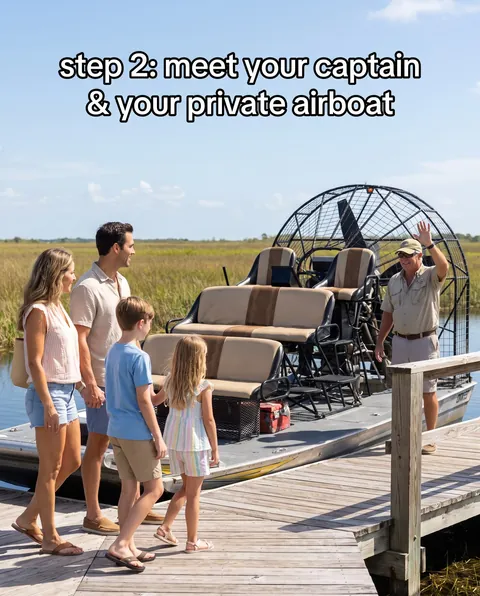
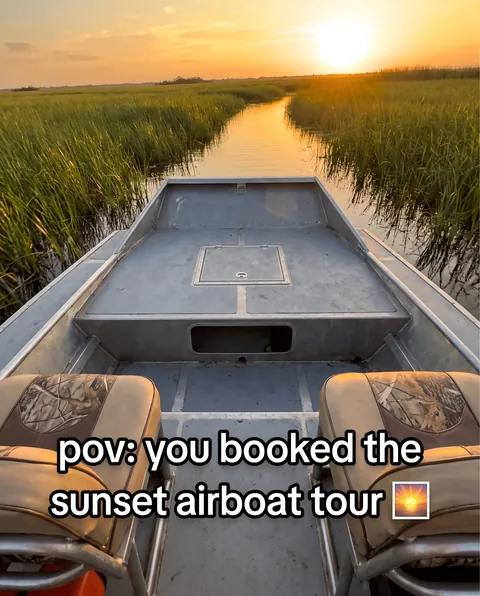
As motorized travel arrived, airboats became part of life for many families who hunted, fished and traveled across the shallow marsh. Airboats are still used by tribal members today, and tribal enterprises offer airboat rides to visitors.
The Miccosukee along the Tamiami Trail
When the Tamiami Trail opened across the Everglades in 1928, it changed daily life for Miccosukee and Seminole families. Living deep in the marsh was becoming harder, and many families moved their camps closer to the new highway, where they could trade, sell crafts and earn a living from passing travelers.
That history is visible today. The Miccosukee Tribe's main community is on its Tamiami Trail Reservation, west of Miami, and the tribe also holds lands along Krome Avenue and Alligator Alley. A 1998 federal law recognized the tribe's long-standing right to live on a strip of land along the northern edge of Everglades National Park. The tribe opened its Miccosukee Indian Village and museum in 1983 to share its history and culture with visitors.
The Seminole Tribe of Florida has several reservations, including Big Cypress, Brighton, Hollywood, Immokalee, Tampa and Fort Pierce. On the Big Cypress Reservation, the tribe runs the Ah-Tah-Thi-Ki Museum, a Smithsonian affiliate whose name means a place to learn, a place to remember.
Learning respectfully
If you want to understand Seminole and Miccosukee history, the best teachers are the tribes themselves. Visit tribal-run sites such as the Ah-Tah-Thi-Ki Museum and the Miccosukee Indian Village, read the history pages each tribe publishes, and look for books and programs created with tribal involvement.
A few simple courtesies go a long way. Reservation communities are people's homes, so stay in public areas and ask before photographing anyone. Some ceremonies and cultural practices are private and not meant for visitors. And remember that both tribes are living nations with modern governments, schools, businesses and families, not chapters that ended long ago.
Out on the water west of Miami, it helps to know that the sawgrass and tree islands around you have been home to Native families for centuries. There is only one Everglades, and its first and longest-standing protectors still live here.
Quick answers
Are the Miccosukee and Seminole the same tribe?
No. They share ancestry and much history, but the Miccosukee Tribe of Indians of Florida and the Seminole Tribe of Florida are separate, federally recognized nations with their own governments and lands.
When were the Seminole and Miccosukee tribes federally recognized?
The Seminole Tribe of Florida was federally recognized in 1957, and the Miccosukee Tribe of Indians of Florida in 1962.
Where can I learn about Miccosukee and Seminole culture?
Tribal-run sites are the best place to start, including the Ah-Tah-Thi-Ki Museum on the Big Cypress Reservation and the Miccosukee Indian Village on the Tamiami Trail. Both tribes also publish their own histories online.