The Questions Captains Hear Most
Most guests ask the same handful of questions, usually in the first few minutes on the boat. That makes sense. An airboat is unlike anything most people have ridden, and the Everglades is unlike anywhere most people have been. Here are the questions we hear most, with straight answers.
The ride itself
Is it loud?
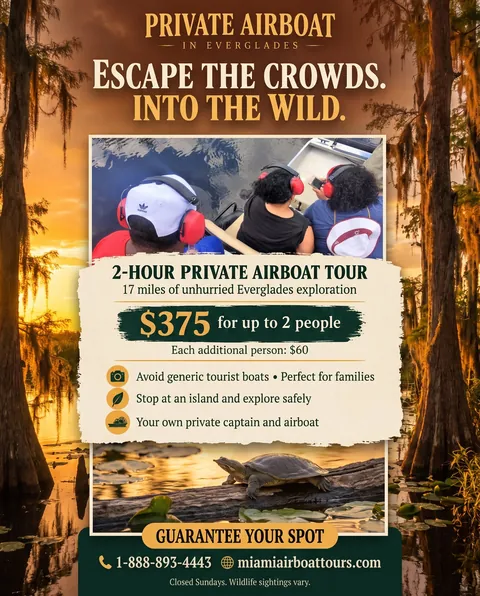
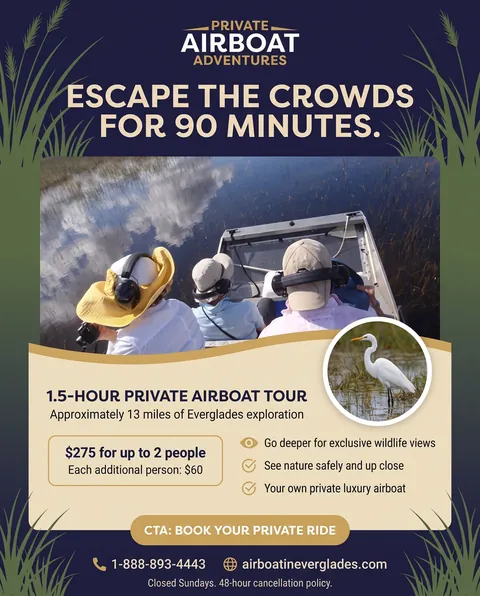
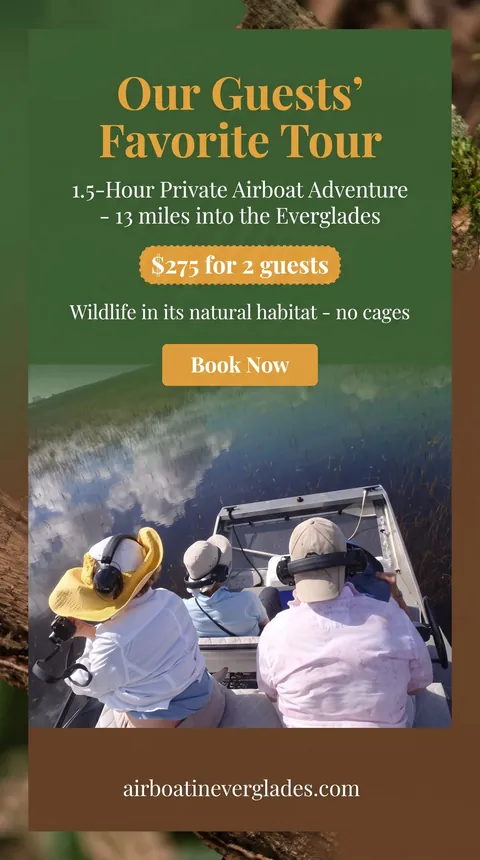
Yes. An airboat is pushed by a large propeller mounted behind the seats, and at speed it is loud. That is why ear protection is provided before the boat leaves the dock. Wear it the whole time the engine is running. The good news is that when the captain throttles down to look at wildlife, the marsh goes quiet almost at once, and you can hear birds, wind in the sawgrass and the captain talking.
Are we going to get wet?
Maybe a little. Turns and gusts of wind can send some spray over the bow, and the front row catches more of it. It is usually a light mist, not a soaking. Keep phones and cameras in a pocket or bag when the boat is running fast.
How shallow can it go?
Shallower than you would believe. An airboat has a flat bottom and no motor or rudder hanging below the hull, so it slides over the surface instead of cutting through it. That lets it cross water only a few inches deep and glide over grass that would stop a regular boat. It is the reason airboats became the working boat of the Everglades in the first place.
I get seasick. Will that be a problem?
For most people, no. The Everglades is a shallow freshwater marsh, not open ocean, so there are no rolling swells. The ride feels more like skimming across a flat field than riding waves. If you are very sensitive to motion, sit near the middle, keep your eyes on the horizon, and tell the captain before you leave so they can keep the turns gentle.
Wildlife
Will we see a gator?
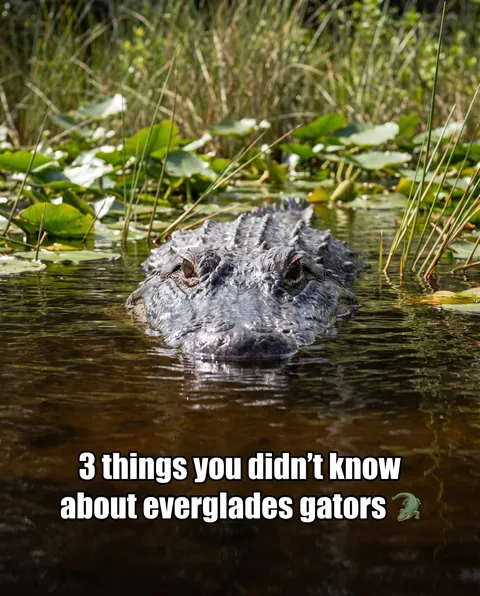
Usually, yes, but nobody can promise it. Alligators are wild animals that move on their own schedule. Captains know the spots where they like to rest and sun, and sightings are more common on cooler, sunny days when gators haul out to warm up. Birds, turtles and fish are almost always around, even on days the gators stay hidden.
Can we touch or feed the animals?
No. Everything you see on the water is wild. Feeding alligators is illegal and dangerous in Florida, because gators that link people with food lose their natural fear and can become a threat. Hands stay inside the boat, and nothing gets tossed overboard. The best way to enjoy wildlife out here is to watch quietly and let the animals go about their business.
Can we stop for photos?
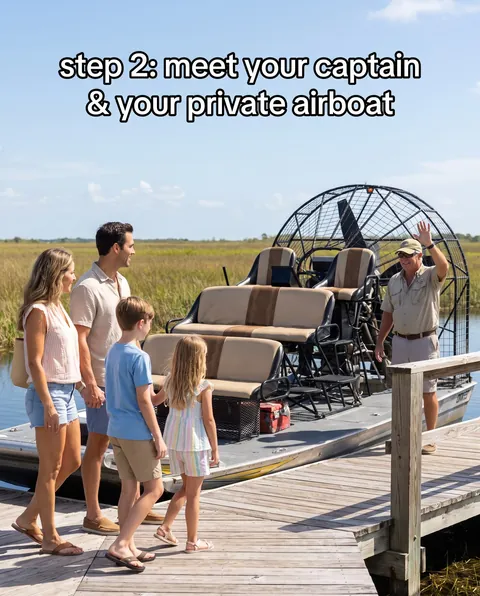
Absolutely. On a private ride, you can ask the captain to stop as often as you like. On a shared ride, stops happen whenever there is something worth seeing. When the boat is stopped and quiet is the best moment for pictures, and it is also when the birds are most likely to stay put.
Kids, comfort and safety
Is it safe for kids?
Airboat rides are a family favorite. Children ride seated with an adult and should wear ear protection like everyone else; small ears are even more sensitive to noise. Bring snacks and water for younger kids, and ask about age or size requirements when you book, since they can vary by boat and tour type.
What should I bring?
Sunscreen, sunglasses with a strap, a hat that fits snugly or can be tucked away, insect repellent, water and a light layer for cooler mornings. Leave loose items like scarves and wide-brim hats in the car; the propeller wind will try to take them.
Is there a bathroom on the boat?
No. Plan a restroom stop before you board.
Weather and timing
What happens if it rains?
Light rain usually does not stop a ride. Lightning does. Florida summers bring frequent afternoon thunderstorms, and an open boat on a flat marsh is no place to be when thunder is in the air. The National Weather Service rule is simple: when thunder roars, go indoors, and wait 30 minutes after the last thunder before heading back out. If a storm moves in, expect a delay or a reschedule. That is a safety call, not an inconvenience.
What is the best time of day to go?
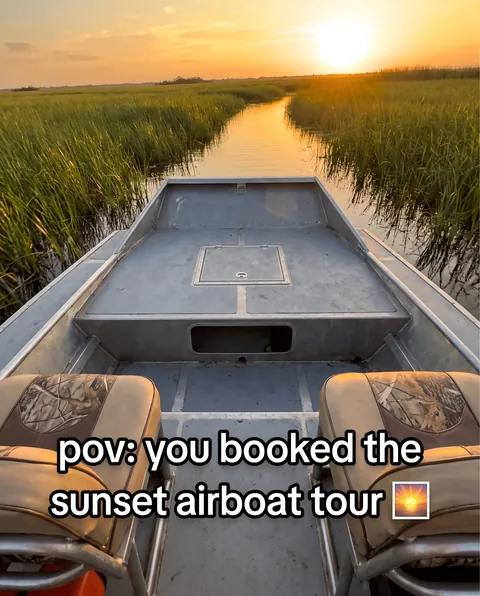
Mornings tend to be cooler and calmer, with soft light and active birds. Midday is brightest and hottest. Late afternoon and sunset rides offer golden light and a sky full of birds heading to roost. In the summer wet season, morning is often the safest bet because storms tend to build in the afternoon.
What time of year is best?
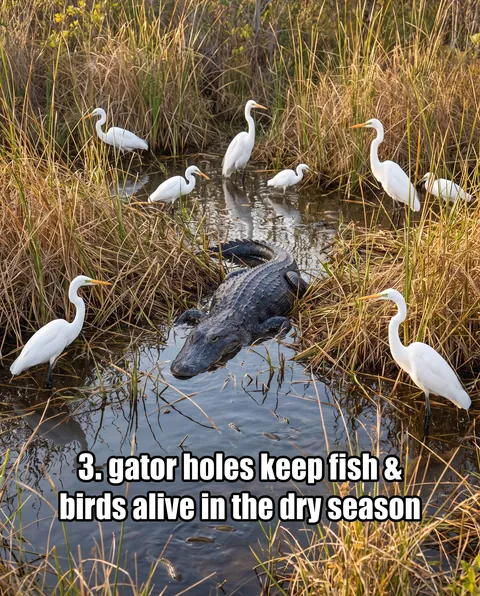
The dry season, roughly December through April, brings milder temperatures, fewer mosquitoes and wildlife gathered around the remaining water. The wet season, roughly May through November, is hotter and stormier, but the marsh is green, full and beautiful. Either season is worth seeing.
Still have a question?
Ask your captain. Questions are part of the ride, and the people who run these boats tend to know the marsh well. The name of a bird, how the sawgrass grows, why the sawgrass has such sharp edges: odds are someone on board has heard it before and is happy to answer again.
Quick answers
Do I need to bring my own ear protection on an airboat?
No. Ear protection is provided before the ride. Keep it on whenever the engine is running, and make sure children wear theirs too.
Can I bring my phone on an airboat ride?
Yes. Keep it in a zipped pocket or on a lanyard while the boat is moving, and take photos when the captain stops.
Do airboat rides run in the rain?
Light rain usually is not a problem, but rides pause for lightning. Wait at least 30 minutes after the last thunder before going back out on open water.