How to Photograph Wildlife from an Airboat
The best wildlife photos from an airboat come from three habits: shoot when the boat is stopped, use a fast shutter speed, and focus on the animal's eye. Everything else is refinement. An airboat gives you a low, close view of the marsh that is hard to get any other way, but it is also a vibrating, sometimes damp platform. A little preparation makes the difference between a blurry memory and a photo you will print.
Shoot when the boat stops
While the engine is running fast, the boat vibrates, the wind pushes on your hands and spray can hit the lens. That is time to keep gear secured and enjoy the ride. When the captain throttles down near a gator or a group of wading birds, the boat settles and you have your window. Have the camera ready before the boat fully stops, because animals do not always wait.
Even at idle there is some motion, so treat every shot as handheld from a moving platform.
Camera settings that work
Shutter speed
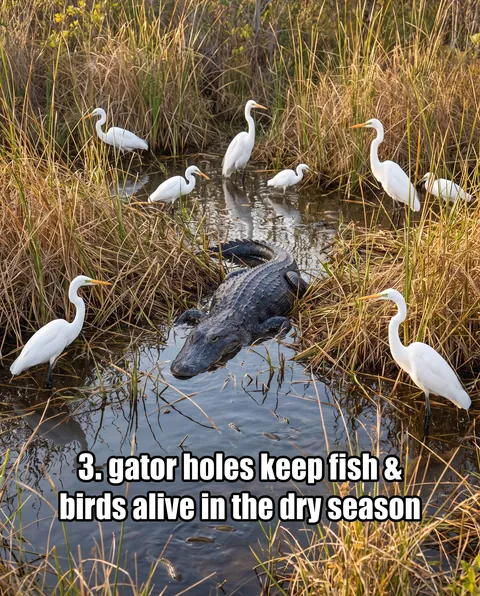
Speed is your friend. For a resting alligator, around 1/500 second is a good starting point to cancel out boat motion. For birds taking off or in flight, go to 1/1000 or faster, and faster still for small, quick birds. If your camera has image stabilization, turn it on, but do not rely on it to freeze a moving subject.
Aperture and ISO
A moderately open aperture, such as f/5.6 to f/8 on most zoom lenses, gives enough depth to keep a gator's head sharp from snout to eye. Let auto ISO handle the rest. A little grain in a sharp photo is better than a clean but blurry one.
Focus
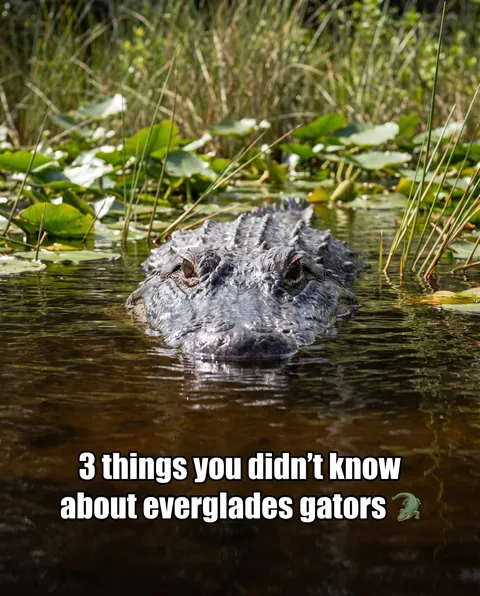
Use continuous autofocus and a single focus point or animal-eye detection if your camera offers it. Put the point on the eye. With an alligator, the eye is often the only part above the waterline, and a sharp eye makes the whole picture read as sharp. Burst mode helps too; take several frames and keep the best one.
Bracing on a boat
- Keep your elbows tucked against your body and both hands on the camera.
- Rest your forearms on your knees or the seat rail if you can, but avoid pressing the camera directly against the hull, which passes vibration straight into the lens.
- Exhale slowly and press the shutter gently, the way you would steady a pair of binoculars.
- Tripods are not practical on an airboat. A compact monopod can help on a private ride, but only if it does not crowd other guests.
Light and timing
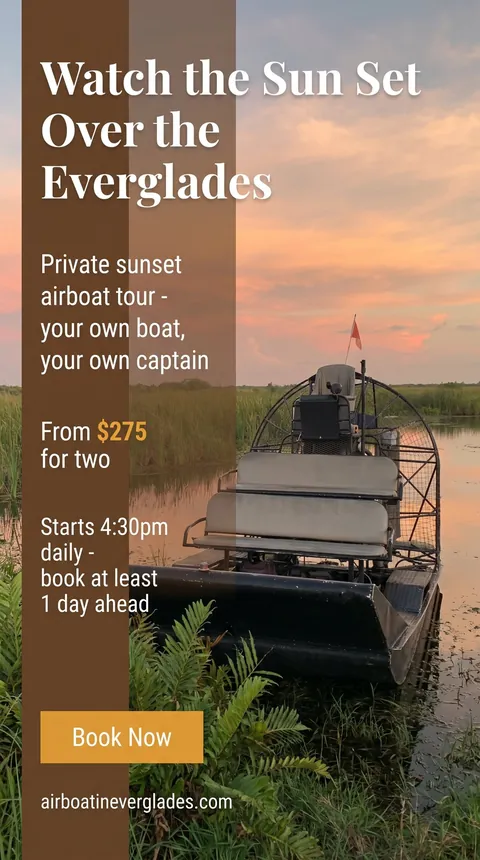
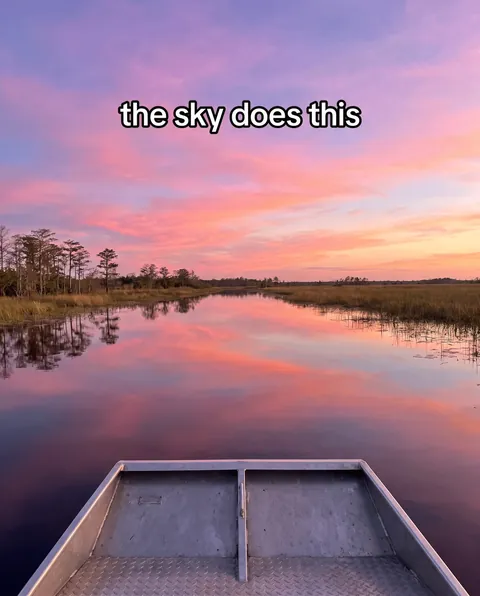
Light changes everything in the Everglades. Early morning and the hour or so before sunset bring soft, warm light that flatters feathers and the textured backs of alligators, and long shadows give the flat marsh some depth. Midday sun is harsh and bright, bleaching out color and creating deep shadows under a bird's wings.
If you are out at midday, put the sun behind you so your subject is front-lit, and watch the edges of white birds like egrets, which can lose detail easily. Underexposing slightly helps. Polarizing filters cut glare on the water and deepen blue skies, which also helps on bright days.
Phone or telephoto?
Modern phones do a fine job with landscapes, wide views of the boat and sky, and wildlife that is fairly close. Use the phone's main lens when you can, since heavy digital zoom quickly softens detail. Tap to focus on the animal, then lock exposure so the bright water does not darken your subject. Burst mode is useful here too.
For birds and anything at a distance, a telephoto zoom in the 100 to 400mm range is the most versatile choice. It lets you fill the frame without asking the captain to crowd the animal, which is better for the wildlife and usually better for the picture.
Keeping gear dry
- Use a lens hood. It blocks glare and catches some spray.
- Carry a microfiber cloth in an easy pocket and wipe the front element often.
- Keep cameras inside a bag or under a jacket while the boat runs fast.
- Use a wrist strap or neck strap at all times. Anything dropped over the side is usually lost.
- Avoid changing lenses on the water if you can. Spray, humidity and wind make it risky.
Photograph ethically
The best wildlife images show animals behaving naturally, and that only happens when they are not disturbed. Bird conservation groups such as Audubon advise using a telephoto lens to keep your distance and treating any change in behavior, like a bird hunching, freezing or flushing, as a sign you are too close. A bird that flies off is burning energy it needs for feeding and resting.
A few simple rules for the airboat:
- Do not use flash on wildlife. It rarely improves a daylight shot and can startle animals.
- Never toss food, objects or anything else to get a reaction. Feeding alligators is illegal in Florida.
- Do not ask the captain to push closer to an animal that is already moving away.
- Keep voices low when the boat is stopped. Quiet boats see more.
Patience pays off. Some of the best moments come after the boat has sat still for a minute and the marsh forgets you are there: a heron resumes stalking, a turtle surfaces, a gator lifts its head. Be ready, keep your shutter fast, and let the animals set the pace.
Quick answers
What shutter speed should I use on an airboat?
Start around 1/500 second for resting animals and 1/1000 or faster for birds in flight. The boat's vibration means faster is almost always safer.
Can I get good wildlife photos with just a phone?
Yes, for landscapes and animals that are fairly close. Use the main lens, avoid heavy digital zoom, and shoot when the boat is stopped.
Is it OK to use flash when photographing alligators or birds?
It is best not to. Flash rarely helps in daylight and can disturb wildlife, so rely on natural light and a fast lens instead.