What to Wear on an Airboat Tour
The short answer: wear light, comfortable clothes you do not mind getting a little damp, closed-toe shoes, sunglasses with a strap, and sunscreen and bug repellent you put on before you arrive. Leave anything loose, floppy or precious behind. An airboat is an open boat moving through wind, sun and the occasional spray, and dressing for those three things makes the ride far more enjoyable.
Here is how to think about each piece.
Clothing for sun, wind and spray
South Florida is warm most of the year, but the Everglades can surprise you. In the wet season, roughly May through November, average highs reach the low 90s and the humidity makes it feel hotter. In the dry season, roughly December through April, mornings can be cool, and a cold front now and then drops temperatures into the 50s. Add the wind from a moving boat, and a winter morning ride can feel chilly.
- Warm months: light, breathable fabrics in light colors. A thin long-sleeve shirt protects against sun and bugs better than a tank top and is not much warmer.
- Cool months: dress in layers. A light jacket or windbreaker you can zip up when the boat runs fast and open when it stops is ideal.
- Spray: quick-dry fabrics beat cotton. You will not be soaked, but a light mist over the bow is common, especially in the front row.
Long pants are a smart choice in the evening or during the rainy months, when mosquitoes are most active. Shorts are fine on a breezy dry-season afternoon.
Shoes
Wear closed-toe shoes with a decent grip, such as sneakers or boat shoes. You will be stepping on and off a boat at a dock, and decks can be wet. Flip-flops slip off easily and offer little protection. Leave heels and anything you would hate to scuff at home.
Hats, sunglasses and the propeller wind
The big fan behind you moves a lot of air, and loose items can be pulled off and carried away. Anything that goes overboard is usually gone for good, and anything that goes backward is a hazard near the propeller.
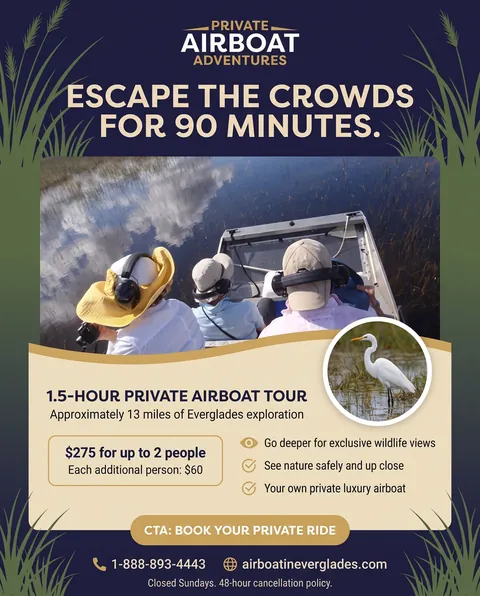
- Hats: a snug ball cap or a hat with a chin strap works best. Wide-brim sun hats tend to fly. If yours does not fit tightly, plan to take it off and hold it while the boat is moving.
- Sunglasses: polarized lenses cut glare off the water and make it easier to spot wildlife below the surface. Use a strap or retainer cord.
- Hair: tie back long hair. The wind will thank you, and so will the person sitting behind you.
- Scarves and loose jewelry: leave them in the car.
Sun protection
There is little shade on an open marsh, and the sun reflects off the water. Apply a broad-spectrum sunscreen before you arrive so it has time to soak in, and do not forget ears, necks and the tops of feet. A lip balm with SPF helps too. Sunscreen applied on the boat tends to end up in your eyes once the wind picks up.
Bug spray
Mosquitoes are part of life in the Everglades, especially in the wet season and around dawn and dusk. Florida health officials recommend EPA-registered repellents with active ingredients such as DEET, picaridin, IR3535 or oil of lemon eucalyptus. Apply repellent after sunscreen, and put it on before you get to the dock rather than spraying it near other guests. On sunset rides, long sleeves and long pants add another layer of protection.
Phones and cameras
You will want pictures, so plan to keep your gear secure.
- Use a phone lanyard, wrist strap or zippered pocket. A phone dropped in the marsh is very hard to recover.
- A small waterproof pouch or zip-top bag protects against spray and rain.
- Keep cameras in a bag while the boat is running fast, and bring them out when the captain stops.
- Bring a soft cloth to wipe spray off lenses.
What to leave behind
Travel light. Large bags, umbrellas, selfie sticks and anything that can catch the wind are more trouble than they are worth. Leave valuables you do not need locked out of sight or at your hotel. Drones are not appropriate around wildlife on a tour. A small bag with water, sunscreen, repellent and a light layer covers almost everything.
Kids and accessibility
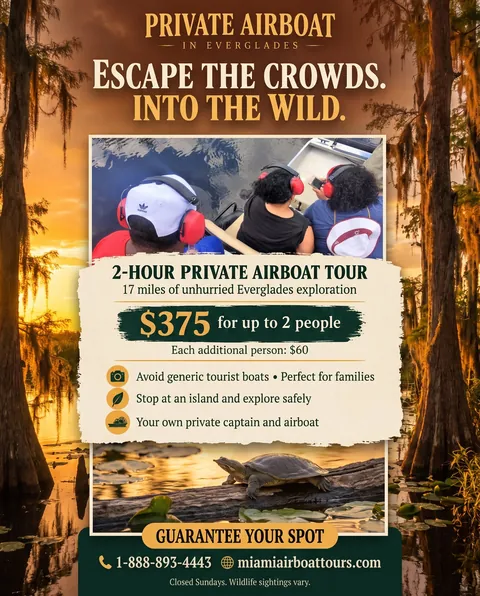
Dress children the same way you would dress yourself: snug hats, sunscreen, a light layer and closed-toe shoes. Ear protection is provided, and kids should wear it for the whole ride. Pack water and a snack, since there are no restrooms or snacks on the boat.
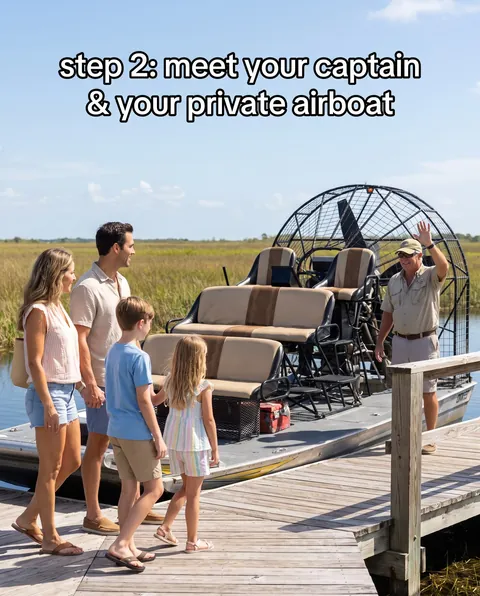
Boarding usually means stepping down from a dock onto the deck and climbing into raised seats. If anyone in your group uses a mobility aid, has trouble with steps, or has back or neck concerns that might be affected by bumps, mention it when you book. Captains can often suggest a seat, a tour type or a time of day that works better, and it is far easier to plan ahead than to sort it out at the dock.
Dress for the conditions, secure what you carry, and the rest of the ride is just wind, water and wildlife.
Quick answers
Can I wear flip-flops on an airboat tour?
It is better not to. Closed-toe shoes with good grip are safer for stepping on and off a wet deck and stay on your feet.
Will my hat blow off on an airboat?
Loose and wide-brim hats often do. Wear a snug cap or a hat with a chin strap, or hold your hat while the boat is moving.
Do I need a jacket for an Everglades airboat ride?
In winter, often yes. Dry-season mornings can be cool, and the wind from a moving boat makes it feel colder, so a light windbreaker is worth bringing.